9. Deep Blue for an Accent Wall
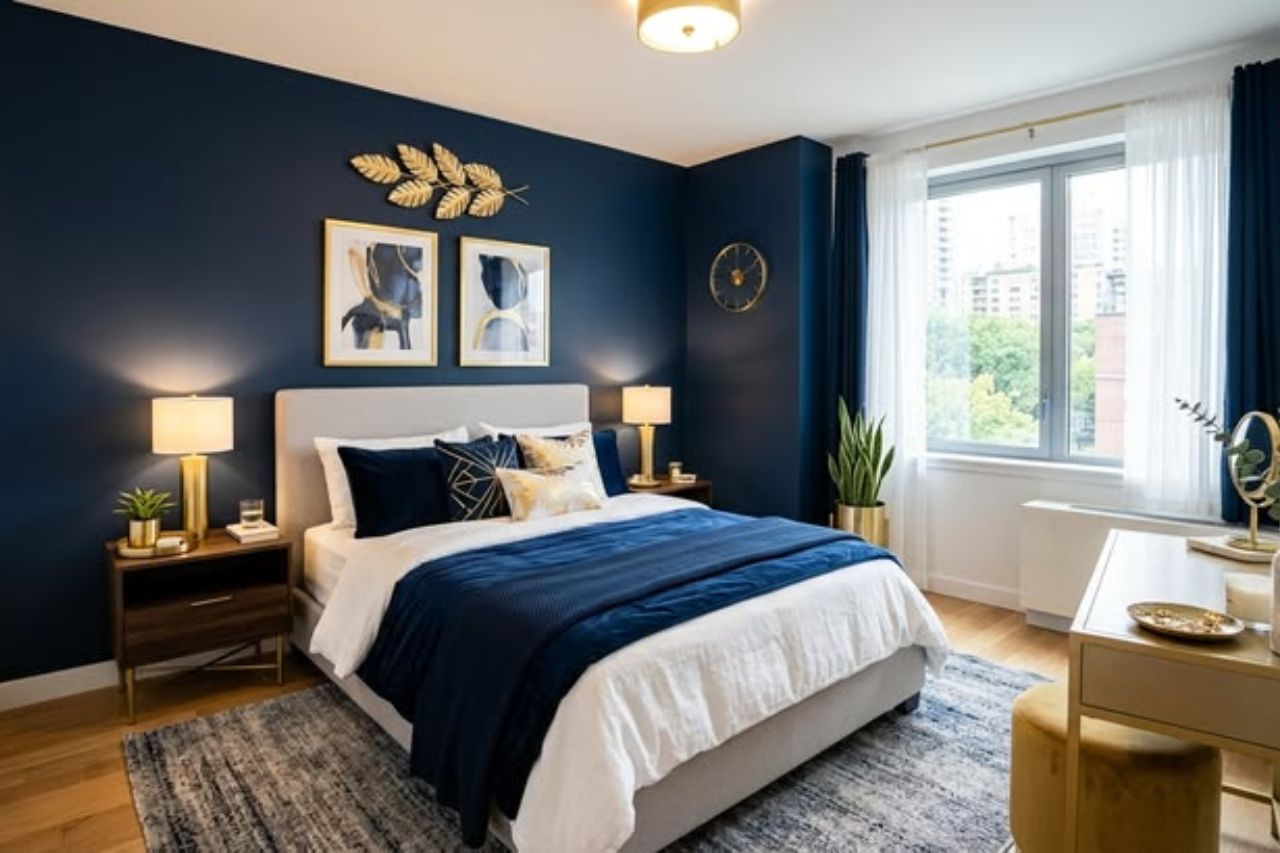
Deep blue can create depth and visual interest when used carefully. Rather than painting every wall in a dark shade, consider using deep blue on the wall behind the bed.
An accent wall can become a focal point while the other walls remain light and neutral. This approach can help prevent the room from feeling too dark.
Deep blue can be combined with:
- White or cream bedding
- Light wood furniture
- Soft grey accessories
- Brass or gold details
- Neutral rugs and curtains
Before choosing a dark accent color, consider the amount of natural light entering the room.
10. Greige for a Balanced Neutral Look
Greige combines elements of grey and beige, creating a flexible neutral color for bedroom walls. It can provide more warmth than traditional grey while offering a modern appearance.
Greige works well with many interior styles and can coordinate with both warm and cool décor, depending on its undertones. It is ideal for creating a neutral look while adding subtle depth to the room.
Pair greige walls with cream bedding, wooden furniture, soft white curtains, and muted decorative accessories for a balanced look.
Consider Your Bedroom Lighting
Lighting can significantly change how a wall color appears. The same paint can look different in morning sunlight, afternoon light, and artificial lighting at night.
Before committing to a color, observe how the sample looks throughout the day. Bedrooms with limited natural light may benefit from lighter and warmer shades, while bright rooms can accommodate slightly deeper colors.
Choose the Right Paint Finish
Color is not the only factor to consider when painting bedroom walls. The paint finish can also affect the final appearance.
A low-sheen or matte finish can help create a soft, understated look by reducing visible reflections. An eggshell finish provides a soft sheen and makes the walls easier to clean.
Consider the condition of the walls and the level of maintenance required when selecting the finish.
Final Thoughts
Choosing the right bedroom wall painting colour can make the room feel more relaxing, comfortable, and visually balanced. Soft beige, light blue, sage green, warm white, soft grey, dusty pink, lavender, muted terracotta, deep blue, and greige are all options to consider depending on your bedroom design and personal preferences.
Remember to consider lighting, room size, furniture, existing décor, and paint finish before making your final decision. Testing samples can also help you see how the color works in the actual space. If you need help selecting suitable products, a reliable painting supplier can provide guidance based on your wall surface, desired finish, and project requirements.

 10 Bedroom Wall Painting Colour Ideas for a Relaxing Space The bedroom should feel comfortable, calm, and welcoming, making wall color… Read more: 10 Bedroom Wall Painting Colour Ideas for a Relaxing Space
 Anti-Slip Floor Paint: A Guide to Safer Flooring Solutions Floor safety is an essential consideration for residential, commercial, and industrial properties.… Read more: Anti-Slip Floor Paint: A Guide to Safer Flooring Solutions
 How Catering Services in KL Can Be Customized for Different Event Types Kuala Lumpur is a dynamic and multicultural city where… Read more: How Catering Services in KL Can Be Customized for Different Event Types
 Western Food in KL Halal Eateries Perfect for Gatherings and Celebrations Kuala Lumpur has become one of the best places to… Read more: Western Food in KL Halal Eateries Perfect for Gatherings and Celebrations
 Best Occasions to Use Halal Finger Food Catering in Malaysia Malaysia’s social scene is built around gatherings, celebrations, and shared meals.… Read more: Best Occasions to Use Halal Finger Food Catering in Malaysia
 How to Choose the Right Diaper Brand Malaysia for Your Baby Choosing the right diaper brand in Malaysia for your baby… Read more: How to Choose the Right Diaper Brand Malaysia for Your Baby


